
2 min read
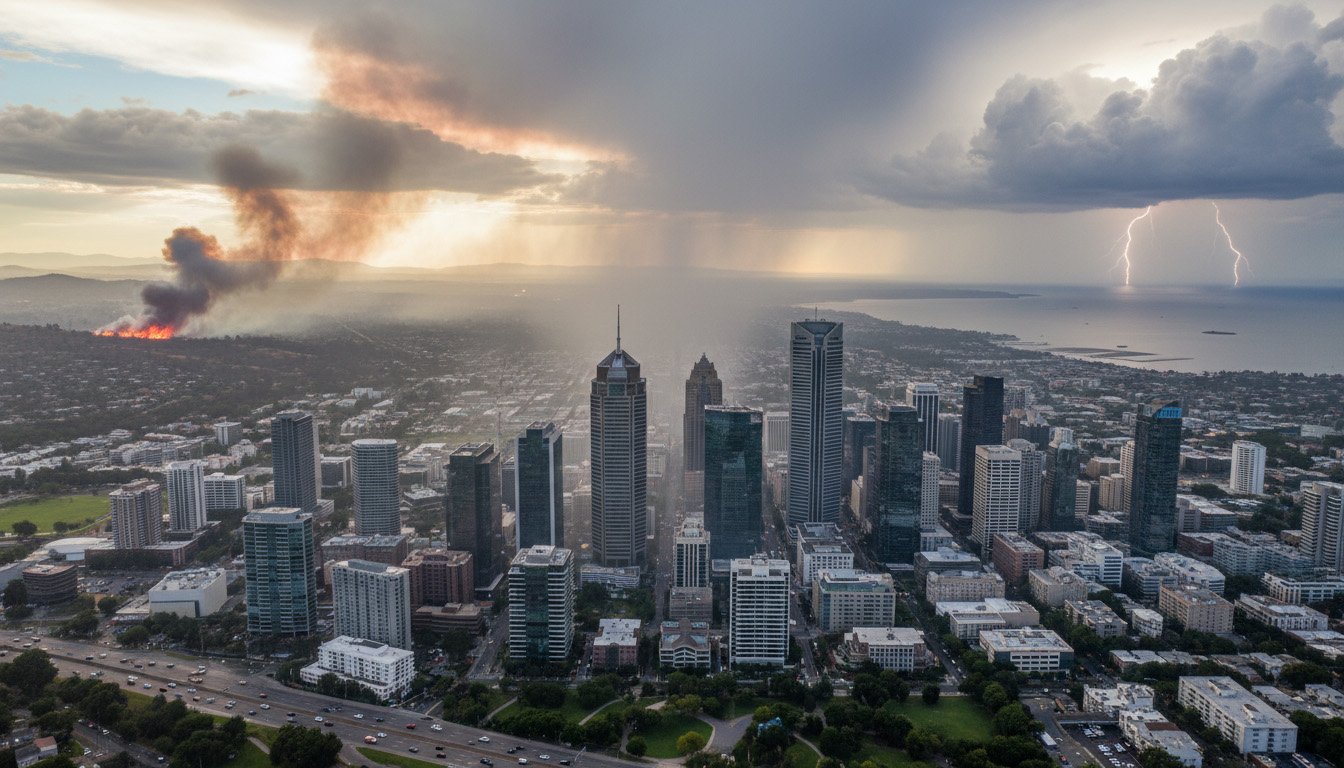
As we close out 2025, it’s a critical time for leaders and professionals across all sectors to reflect on the unprecedented impact of extreme weather. This year saw a concerning concentration of billion-dollar disasters that tested our infrastructure, supply chains, and community resilience. The frequency and severity of these events underscore the urgent need to integrate weather and climate risk into our long-term strategic planning.
Here is a recap of five of the most significant billion-dollar events from the first half of the year:
The Catastrophic Southern California Wildfires (January 2025)
The year began with a devastating blow to the Los Angeles metro region. Driven by extreme Santa Ana winds, the Palisades and Eaton Fires resulted in an estimated $61.2 billion in direct losses, making it the costliest event through June. Over 12,000 structures were destroyed. This disaster was a powerful demonstration of escalating wildfire risk, highlighting vulnerabilities in urban-wildland interface planning and property insurance markets.
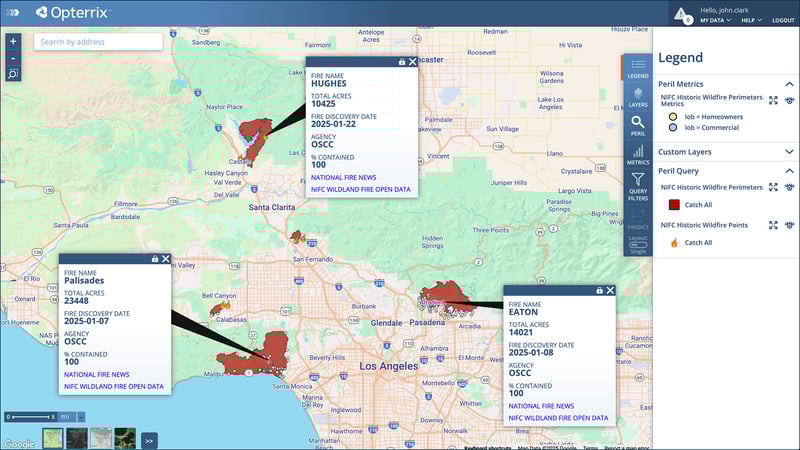
Fire perimeters from the NIFC for the Los Angeles wildfires, January 2025.
Central US Tornado Outbreak (March 14-16, 2025)
The Central, Southeast, and Eastern U.S. experienced a massive, multi-state tornado outbreak involving an estimated 182 (preliminary) tornadoes. This concentrated barrage, which included violent EF-4 tornadoes in Arkansas, caused significant disruption to transportation and commercial activity, accumulating over $10.6 billion in damages and tragically costing 43 lives. The breadth of this event emphasizes the need for advanced early warning systems and hardened infrastructure across the Tornado Alley region.
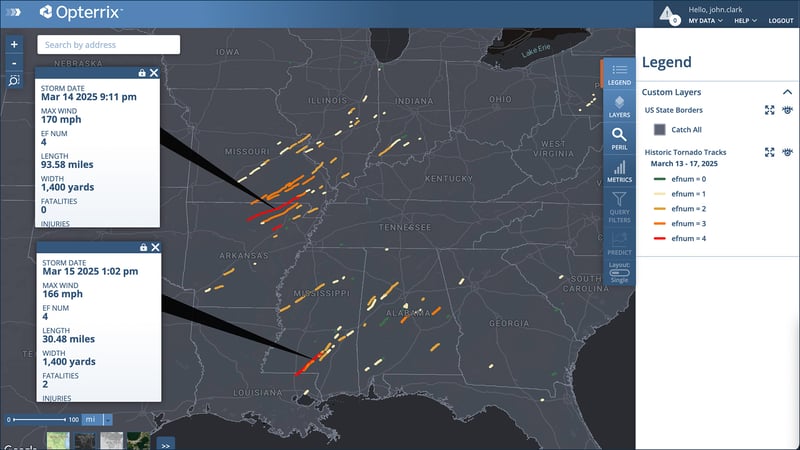
Historic tornado track data from the National Weather Service, for March 14-16, 2025.
Early March Severe Storms (March 3-5, 2025)
A powerful storm system impacted the South and Central U.S., delivering destructive straight-line winds—reaching hurricane-force gusts—to major urban areas like the Dallas–Fort Worth metro region. This event resulted in widespread power outages for over 400,000 people and $1.4 billion in losses, underscoring the critical dependence of modern economies on resilient power grids and infrastructure against high wind events.
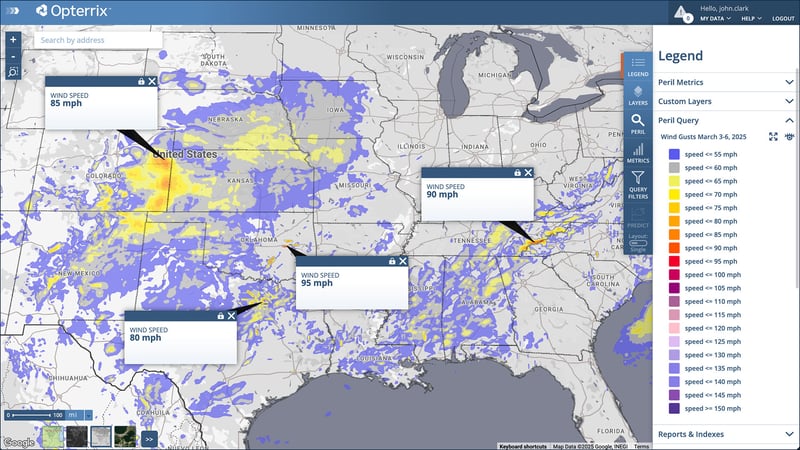
Estimated wind gust data from Opterrix, from March 3-6, 2025.
North Central & Eastern US Severe Weather (May 14-18, 2025)
A multi-day severe weather outbreak affected the north central and eastern U.S., bringing large hail, damaging winds, and tornadoes. The event resulted in significant damage, including stones over four inches in Kansas, Texas, and Wisconsin. Industry estimates suggest insured losses ranged from $4 billion to $7 billion, setting a record for storm-related damages at the start of the year. This event contributed substantially to the $20 billion in U.S. insured storm losses by late May 2025.
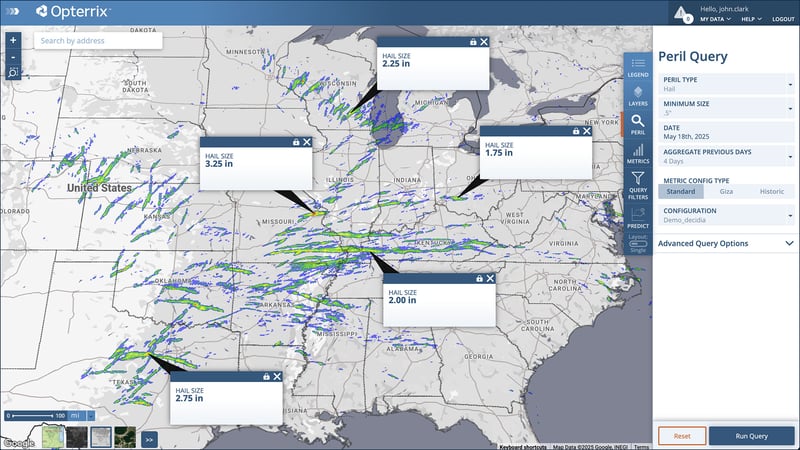
Estimated hail size data from Opterrix, for May 14-18, 2025.
Central Flooding And Tornado Outbreak (April 1-7, 2025)
The mid-Mississippi and Ohio Valleys were hit by a week-long series of hazards, including historic flash flooding with accumulations over 15 inches of precipitation, and over 150 confirmed tornadoes (six reaching EF-3 intensity). This severe weather sequence, which resulted in $4.3 billion in losses and 25 fatalities, impacted major metropolitan suburbs near St. Louis, Memphis, and Louisville. The simultaneous occurrence of flooding and high-wind events highlights a critical challenge for disaster response and recovery efforts.
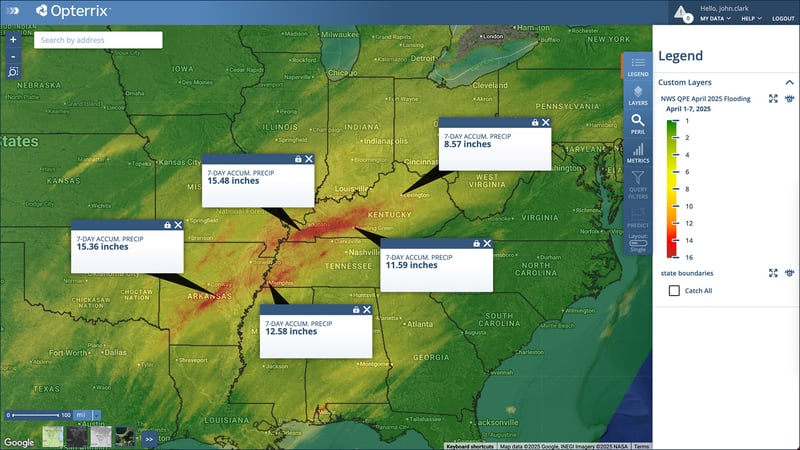
Quantitative Precipitation Estimations (QPE) from the National Weather Service, for April 1-7, 2025.
Moving Forward: Resilience as a Strategic Imperative
These five events alone accounted for over $78.7 billion in losses. As we plan for 2026, the question is not if another high-impact weather event will occur, but when. Leaders must view climate resilience—from hardening facilities to optimizing supply chain routes—not just as a cost, but as a core competitive advantage.
True resilience requires more than just capital; it requires the right technology. It’s time to retire reactive workflows and adopt the modern standard for exposure management. Opterrix gives you the foresight to handle complex weather events with confidence. We help you balance your exposure, sharpen your underwriting guidelines, and lock in the financial stability your stakeholders demand.
Don't let the next catastrophe define your year. Contact us today to build a proactive, profit-driven strategy for 2026.